Monday, March 9, 2009

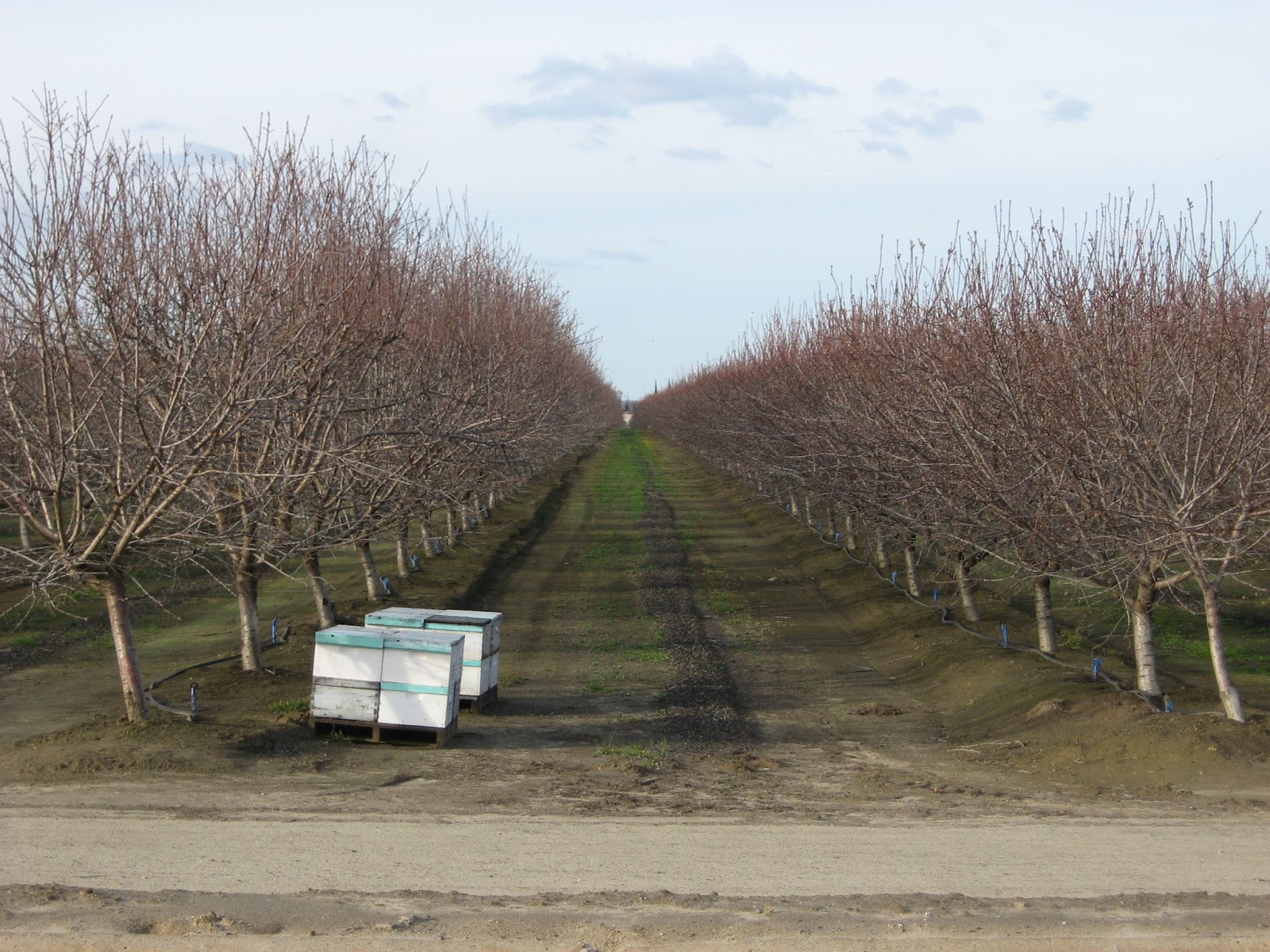
Almond Bloom.. Bees busy at work! They are expensive!!

Almond trees are not self-pollinating, so we need at least two different varieties of trees for a productive orchard. Bees pollinate alternating rows of almond varieties. Frost free, mild temperatures allow bees to work their best.


Wednesday, March 4, 2009

Carpenter ranch at peak bloom - Just beautiful. I call them "trees of dreams" :)

The Nonpariel variety are starting to drop petals, but there are still a few unexpanded buds on the Monterey and Wood Colony. We enjoyed good bee activity most of last week during early bloom.


Friday, February 27, 2009

Pictures taken on sequential days so you can see how rapidly bloom develops!

If you haven't guessed by now, bloom time is the single most crucial stage in almond farming and so it is eagerly awaited and anxiously monitored. It singlehandedly determines the crop yield.

Next week's weather is forecast to be wet, stormy and ending with cold temperatures by next weekend. It seems that this year may be a bit more challenging, and typical, than last year when the weather was so ideal.

We completed the application of the "pink bud" fungicide today so we are in good shape for the rains.


Peaches have started to bloom.. Time to spray! Again!!

Here's what we decided:

1. Scala -- Brown rot, jacket rot, and shot hole control -- costs $16.56/ac
2.  Power Phos -- Fertilizer and pH adjuster -- costs $5.90/ac
3. Pros 90  -- Spreader -- $5.00/ac


Monday, February 23, 2009

Bees eagerly waiting for bloom arrival at Carpenter

Trees standing tall exuding peace, patience and confidence.

Bees are usually placed in the most warm, dry locations possible. We try to place them where morning sun will warm the hives. The sooner hives warm up in the morning, the sooner the bees will begin to forage.